CZ and FriendsS1 E17
What Makes an In-House Lawyer Commercial: Ben Jacobs of Xero on Owning Risk
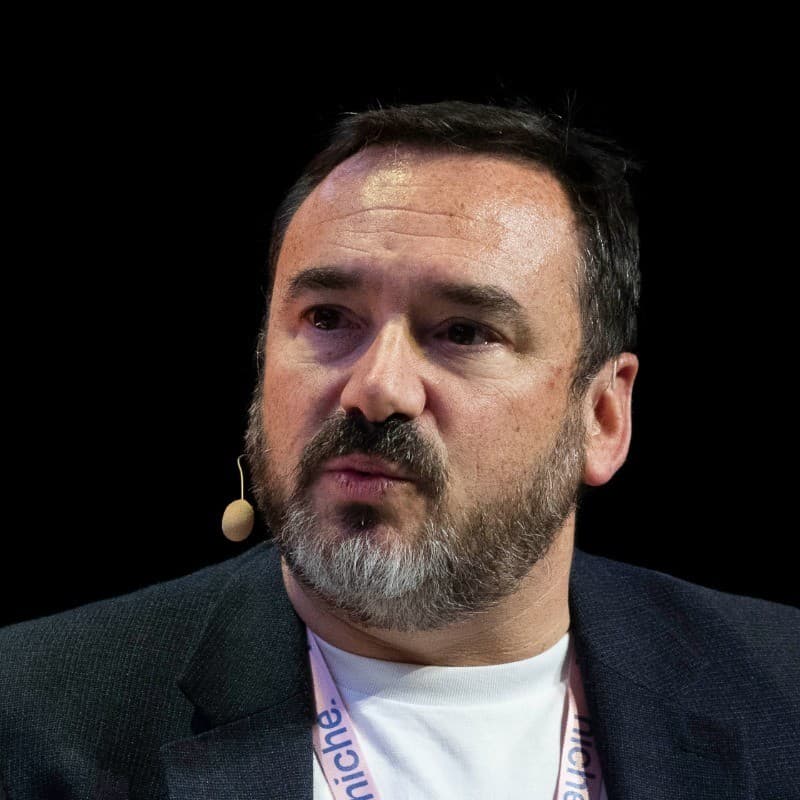
Ben Jacobs
General Manager of Legal for Strategic Growth and Development, Xero
Episode Overview
What makes an in-house lawyer commercial? Ben Jacobs defines it as risk acceptance, informed by understanding of the law, the business, and the goals.
It is the ability to frame and calibrate a risk well enough to say, yes, this is a risk our business can accept.
When internal clients ask for a "commercial lawyer," they sometimes mean one who says yes to everything, and Jacobs will tell you that lawyer is dangerous.
He earned the definition the hard way. Jacobs started at Allen & Overy in London believing that going in-house was, in his words, an expression of failure, what you did if you couldn't make partner.
Then the global financial crisis put him inside Royal Bank of Scotland, selling off businesses from Argentina to Kazakhstan for a bank majority-owned by the UK government. He noticed that the work he found fulfilling was contributing to the direction of an organization and living with the outcomes.
He has been an in-house lawyer since, and now leads the legal side of Xero's acquisition strategy, including the US$2.5 billion acquisition of US payments company Melio.
In this episode with CZ and Friends host Cecilia Ziniti, co-founder and CEO of GC AI, Jacobs covers the two mindset shifts lawyers make when they move in-house, how buying founder-led companies changes M&A legal work, why his legal team led Xero's AI adoption, and a leadership philosophy built on psychological safety, social capital, and kindness.
About Ben Jacobs
Ben Jacobs is General Manager of Legal for Strategic Growth and Development at Xero, the New Zealand-born cloud accounting platform serving 4.5 million small business customers worldwide. At Xero he is responsible for the M&A, product and technology, and partnerships legal teams.
He joined Xero in 2019 to build its M&A legal function from scratch, and the company has completed seven acquisitions since, ranging from South African reporting platform Syft Analytics to Melio, a US payments company acquired for US$2.5 billion upfront.
Before Xero, Jacobs spent six years leading M&A legal work around the world at Barclays, following a secondment inside Royal Bank of Scotland during the global financial crisis and M&A training at Allen & Overy in London.
He is also President of the In-house Lawyers Association of New Zealand (ILANZ) and sits on the New Zealand Law Society council.
Key Takeaways
- Commerciality is risk acceptance, not saying yes to everything. It means understanding the law, the business, and the goals well enough to calibrate risk; a lawyer who says yes to everything is dangerous, one who calibrates earns the business's trust.
- Going in-house requires two mindset shifts. Move from advising on risk to owning it, and from eliminating risk entirely to calibrating how much the business can accept.
- What looks like excessive caution is often just unexplained risk. Lawyers who articulate a risk clearly enough for the business to make an informed decision get trusted with bigger ones.
- In founder-led acquisitions, culture outranks product. Xero assesses culture and people first, product second, and financials third, because what it is really acquiring is the people who will keep building.
- Legal teams should be early AI adopters. At one point, Xero's legal team was the biggest user of the company's Gemini enterprise trial before it rolled out company-wide.
Is Going In-House a Step Down From Big Law?
No, and Jacobs is embarrassed he once believed it was. As a junior lawyer at Allen & Overy, he saw in-house as the path for people who couldn't make partner.
A secondment changed that. Royal Bank of Scotland, majority-owned by the UK government after the financial crisis and unwinding its disastrous acquisition of Dutch bank ABN AMRO, needed M&A lawyers in-house to sell off businesses in Argentina, Chile, Colombia, and Kazakhstan.
Jacobs moved to Scotland for a year and did the selling.
Jacobs described the realization:
What I found fulfilling about being at the Royal Bank of Scotland was contributing to the direction of the organization, living with the outcomes of what I'm doing and contributing to that success, as scary as it is.
The partner track, he realized, offered him status, a nice title, and a decent paycheck, and none of those were the things he looked forward to. When he finished the secondment and returned to London, he knew.
An in-house role at Barclays came up, he jumped, and apart from one brief return to private practice when he moved to New Zealand, he has been in-house ever since.
What Makes an In-House Lawyer Commercial?
A commercial in-house lawyer accepts risk on an informed basis. That means understanding the law, the business, and the goals well enough to frame a risk, calibrate it against the company's risk appetite, and say yes with conviction.
Experience helps, but Jacobs is clear that younger lawyers can be commercial too, because the job runs on understanding, and a younger lawyer can build that early.
Jacobs, on the definition he opens the episode with:
For me, commerciality is risk acceptance. That's the saying yes bit, but informed by understanding. And that can be understanding of the law, understanding of the business, understanding of the goals... It's that understanding and being able to frame and calibrate the risk appropriately to say, yes, I believe this is a risk that our business can accept.
The corollary matters as much as the definition. When lawyers get labeled uncommercial, Jacobs sees two causes: sometimes fear, and sometimes a failure to explain the risk well enough for the business to make an informed decision about accepting it.
An unexplained risk looks like obstruction to the business. Explained clearly, the same risk reads as counsel. That same instinct, sizing risk against the business's real objectives rather than eliminating it outright, is the discipline GC AI's guide to how great GCs think about growth, risk, and crisis management covers in more depth.
What Are the Two Mindset Shifts When Lawyers Move In-House?
Jacobs names two: from advising on risk to owning risk, and from risk elimination to risk calibration. In private practice, you lay out the opportunity, the options, and the risks, and the client decides; if the risk manifests, you advised, they chose.
In-house, your organization lives with the outcome of the decisions you helped make. Give up a warranty on a deal and the company carries that concession when the thing it covered goes wrong.
The second shift confronts the perfectionism law firm training instills. The world is gray, and a lawyer who pursues the elimination of all risk signals that they don't understand what the business needs.
Calibration, informed by the company's strategy and risk appetite, is the job. Cecilia and Jacobs land on the same point from opposite hemispheres. Saying yes to everything and saying no to everything are both failures of calibration.
What Skills Make a Great M&A Lawyer?
Extreme flexibility, comfort with irreversible decisions, and empathy. Jacobs frames deal work through a distinction his chief executive uses. Two-way doors are decisions you can reverse, and M&A is typically a one-way door.
Knowing which positions are the big rocks to hold and where you can pivot, and moving quickly when the situation changes, is the craft.
Jacobs explained the empathy requirement with a maxim:
There's a maxim of M&A that says that the right deals are the ones where everybody walks away equally unhappy.
He operationalizes empathy at two levels. The macro level is structural. It means understanding what the other side needs from the deal.
A VC seller has a fund to return, so significant long-tail liability is a nonstarter, and proactively offering reps and warranties insurance solves their problem before it becomes your standoff.
The micro level is tactical. Don't drop disclosure schedules at the last minute, don't manufacture surprises, and surface the hard things up front.
Deals get done because both sides reach agreement, which is the part of the job Jacobs prefers to litigation. You have to find your way to yes together.
How Does Acquiring Founder-Led Companies Change M&A Legal Work?
It moves relationships ahead of legals. At Barclays, Jacobs negotiated with other banks' sophisticated corp dev teams, where both sides pushed hard and nobody took it personally.
At Xero, the acquisitions to date have been founder-led businesses, and the deal only works if the founder arrives still loving the company that bought them. Xero's assessment sheet reflects that order. Culture and people come first, product second, financials third.
Jacobs, on the Syft Analytics deal, a South African insights and reporting business built by university friends:
The real focus for us, early and ongoing, was in building the relationships with them... Then you can put the legals to one side, and the legals go through so much more easily where you're in a position of trust with each other.
The scale varies enormously. Syft was a deal in the tens of millions of US dollars, while Melio, the US payments company Xero acquired in 2025, cost US$2.5 billion upfront.
Melio's cap table held founders, staff, VCs, and strategic partners, each needing a different case for why the deal was right. The tell that both deals were right, in Jacobs's telling, came during in-person diligence, when the teams started brainstorming together and would not stop.
For the mechanics of compressing that diligence work with a legal AI platform, see how GCs run AI due diligence for M&A and vendor reviews.
Discipline is the other half of the founder-led playbook. Xero raised US$300 million through a convertible note on the Singapore exchange before Jacobs joined, and one of his questions on the way in was how the company would avoid a shopping spree.
The answer shows in the record. Seven acquisitions in six years, each with a strategic thesis and an integration plan. Investors responded with their wallets, funding Melio in part through an A$1.85 billion institutional placement, and Jacobs notes the conviction behind it.
There's two kinds of expressions of investor feedback: there's what they say to you, and there's where they're prepared to put their money.
How Should Legal Teams Lead AI Adoption?
By using it first. When Xero rolled out an enterprise Gemini trial, the legal team became, at one point, the biggest users in the company before it went wide.
Jacobs is extraordinarily proud of that, and it changed how the business saw legal. Legal became the team that helps the company adopt a transformative technology safely.
Xero's AI journey predates the LLM era, and the company was building its own AI tools before ChatGPT launched. Its CEO, Sukhinder Singh Cassidy, who was the first general manager of Google Local and Maps and later ran Google's Asia Pacific business, has pushed adoption from the top.
The flagship customer-facing product is JAX, short for Just Ask Xero, which lets a small business owner query their own accounts or generate an invoice by forwarding a WhatsApp thread.
Legal's role ran on three tracks: guardrails so people could experiment safely in the early days, an internal tool for assessing the risk of new AI use cases as the company contracted with more vendors, and a formal responsible AI use policy, pulled together by Xero's heads of IP and privacy, that the team updates as the technology changes.
In-house lawyers who build that fluency before it is required show up as genuine business partners when it counts, and free legal AI classes are the fastest way to start.
How Do Psychological Safety, Social Capital, and Kindness Build Strong Legal Teams?
Jacobs's leadership philosophy stacks three research traditions. Psychological safety, from Harvard Business School professor Amy Edmondson, he recognized first by its absence. At RBS, a departed CEO's culture of fear outlived him, and Jacobs watched blame paralyze decisions.
Not making a decision is making a decision, a point Xero's board echoes when it asks about M&A. What are the risks of doing the deal, and what are the risks of not doing it?
Social capital, from Dr. Thomas H. Lee, chief medical officer of PG Forsta and a Harvard professor, supplies the second layer. Financial capital and human capital express an organization's potential; social capital, the trust and reciprocity among its people, determines how much of that potential gets executed.
The third layer came from close to home. Dr. Nicki Macklin, a University of Auckland researcher, presented her work on kindness to the New Zealand Law Society council where Jacobs sits.
Her framework has since been picked up by both Edmondson and Lee, and the three co-authored “Why Kindness Isn't a Nice to Have” in Harvard Business Review in July 2025. Jacobs is precise about what the word means:
The principle of kindness is not a soft principle. The definition that Dr. Macklin has is the proactive effort to support someone else's growth, wellbeing or success as a set of observable, intentional actions. And she differentiates it very carefully from niceness. Niceness is avoiding tough conversations.
Asked what he is proudest of at Xero, Jacobs skips the flashy deals. He names the people. He points to hires who get described as “a real Xero,” and team members who leave for bigger seats, including one who departed to become GC of an AI company.
Building teams of good people and watching them go on to good things is, for him, the point.
Why Should In-House Lawyers Learn the Business?
Understanding the business is what makes everything else work. It sharpens risk calibration, deepens relationships, and earns the standing to operate as a business person. Jacobs dislikes the “department of no” label, and he wants to retire the deeper idea underneath it, the perception that lawyers aren't business people.
At Xero, legal frames its work as strategic business partnering, embedded in product teams and their leadership and building alongside them.
His final takeaway doubles as an interview question. When a lawyer wants to join his team from private practice, Jacobs asks why they want to be in-house.
The common answer is “to be closer to the business,” and his follow-up is the filter:
My question back to that is: what does that mean to you? What does it mean to be closer to the business?
Lawyers with a real answer, who want to learn the strategy, the revenue sources, the metrics, and the competitors and partners around their company, get the most out of the seat.
Jacobs takes visible pride in working for a cloud accounting company whose customers light up when he names his employer in their shops. Understanding the business makes the job fun, and it makes you a better lawyer, in that order, by his telling.
Recommended Reading
- How Great GCs Think About Growth, Risk, and Crisis Management: the leadership companion to Jacobs's risk-calibration philosophy.
- AI for General Counsel: One Operating Layer for Solo GCs to Full Departments: how in-house teams put AI to work across the department, the way Jacobs describes legal leading adoption at Xero.
- AI Due Diligence: How GCs Run M&A and Vendor Reviews: the mechanics of compressing the M&A and vendor diligence Jacobs runs deal to deal.
Transcript
Ben Jacobs0:00
So for me, commerciality is risk acceptance. That's the the saying yes bit, but informed by understanding. And that can be understanding of the law, understanding of the um the business, understanding of the goals. It comes from experience as well. That doesn't have to be solely grounded in experience. You know, younger lawyers can be commercial as well. But it's that understanding and being able to frame and calibrate the risk appropriately to say, yes, I believe this is a risk that our business can accept.
Cecilia Ziniti0:37
Welcome back to CZ and Friends, where we talk with legal leaders, technologists, and operators about leadership, the future, and their wisdom. I'm your host, Cecilia Ziniti. Today I'm joined by Ben Jacobs, the general manager of Legal for Strategic Growth and Development at Zero, and president of the In-House Lawyers Association of New Zealand, where he's calling from. Ben's career has taken him from big law in London to MA at Barclays, and eventually now to New Zealand, where he helps lead one of the country's most innovative tech companies. We'll talk about how he went from seeing in-house as a backup plan to realizing it's one of the most impactful roles in business. We'll get into what he's learned about risk, leadership, and building companies that thrive. I feel so lucky to meet Ben. He was introduced by a great friend of mine, uh Namrata, who is the CTO of Xero, and he is also our first guest from the Southern Hemisphere. So very excited about that as well. Ben, welcome to the show.
Ben Jacobs1:27
Thank you very much. Lovely to be here.
Cecilia Ziniti1:29
Amazing. So you said that early in your career, going in-house was an off-ramp from big law. Did your view change and tell us that story?
Ben Jacobs1:38
Yeah, absolutely. I'm rather embarrassed thinking back on that now and what I thought at those times, but at that time. But certainly I went through the traditional path of going to a university, studying law back in London at that point where I was born and bred and grew up, and went into a big law firm because that was exactly what you did. And I loved it. I absolutely loved the time I spent there. I was at Alany. It's an amazing firm. Great training, great learning, great education, um, amazing experiences. Before I come on to talk about a couple of those. But yes, I think like a lot of junior lawyers at big law firms, my view of in-house was that it was an off-ramp, that it was, dare I say it, an expression of failure. You know, it was if you couldn't make partner, then that was what you did. You went in-house. Yes, I'm truly embarrassed saying that now, because uh you won't be surprised now my views have changed. But it but it took a bit of time to get there. I went into a uh at Allenovry and I increasingly specialized into focusing on financial services MA. That led to a pretty interesting couple of years during the GFC, working with some of the UK's biggest banks, trying to keep them afloat and keep the whole financial system and economy going. As we know, uh, was a pretty challenging time. So I came out of that having enjoyed what I'd done with the learnings, but also presented with an opportunity. The Royal Bank of Scotland, one of our biggest banks in the UK, had got into probably the most trouble of all the banks, had ended up being 78% owned by the government, and it had to sort itself out. One of the main things that it had to do was to repatriate a lot of capital, sell off a lot of the businesses that it owned. It had made a fairly disastrous acquisition of part of a Dutch bank called ABN Amro, and so they needed more lay lawyers in a house. So the opportunity came up. Uh, coincided with the birth of my daughter. So actually, we we moved to Scotland for a year because my wife was on maternity leave. It was an amazing year living up there. And, you know, I helped them to sell off businesses in far-flung places like Argentina, Chile, Colombia, Kazakhstan. Um, so great, great fun, really interesting work. Pretty hard. But it was the point where my eyes were opened to what it meant to do this job in-house. And I think what I realized was that I had come to believe that a number of the things that I wanted from my career were just not being fulfilled in a private practice role. Which is not to say that there's anything wrong with private practice. People have very great, wonderful, fulfilling careers. But I think that what I came down to is that I realized that actually the only things that I was really looking forward to if I was to make partner were status, nice tag, and the prospect of a decent paycheck. But actually, what I found fulfilling about being at the Royal Bank of Scotland was contributing to the direction of the organization, living with the outcomes of what I'm doing and contributing to that success, as scary as it is. And I think that and that meant that when I finished that second and came back to London, back to Alanovy, I knew at that point that I wanted to do something different. I wanted to be in-house, and when an opportunity came up to join Barclays, one of the UK's other big banks, and one that had fared a little better through the financial crisis. It had had its own traumas, but I jumped at the opportunity to join them. And one small blip aside, when I moved to New Zealand, um, I've been an in-house lawyer ever since and absolutely love it.
Cecilia Ziniti4:58
What stands out to you about about financial crisis? So you said some bad acquisitions, some good acquisitions, far-flung countries. Like what's I'm always curious that we've heard the expressions like, okay, the lawyers kind of always do well. I talked to one lawyer who had broken up ATT and then had also worked on like kind of rebuying the companies that were broken up over the course of a career. And it was kind of an interesting thing. But what you know, I don't practice MA. I, you know, it's it's it's an area that I find super fascinating because you get the full business. But what's the like, like, what do you learn about like the the economy doing your work like that?
Ben Jacobs5:37
Absolutely. I think that's one of the most interesting things. I mean, you mentioned that you're looking at the whole business. Um, and that's one of the things that's always excited me about that is you do have this sort of big overview of what's going on, both in the business you're looking to buy, but in your own business as well. You're deeply connected to the the strategy and strategic direction, implementing that. So, you know, it's amazing you talk about people sort of, you know, breaking up ADD and buying it again. My the first transaction that I worked on and led at Barclays when I joined them was selling their Russian retail bank. This was back in 2011, long before Russia was um as unpopular as it is now. Uh, you know, we still thought it was necessary to get out. We'd bought that business three years earlier. Unfortunately, I hadn't been there. But definitely one of the things you do see with MA is that cyclical nature of it. But I think that that you know, not only do you do you get the insights into the economy, as you're as you're saying, because you are seeing what is the vision for the future, where is the growth, where are the growth opportunities and how are we going to deliver on that as a business? And you have the opportunity in-house to to do that. But also you're sitting there with very senior people in the organization. It's an amazing opportunity to work with them, to learn from them, to understand the business better and and to see the big strategic shifts. And you know, there's a lot of fun to being in different parts of the business where you are looking at how we're building product and and delivering it, um, how are we selling and go to market? But for me, the M ⁇ A piece has always been super interesting being up at that very high level in the organization.
Cecilia Ziniti7:05
Anybody stick out from your career as somebody who's an incredible deal maker? And what are the qualities that that make them so? Like so there's the legal side, which we'll get into. I'm actually one of the, you know, we have a a good chunk of of listeners who are you know general counsel, maybe gonna become COO, or you know, really that strategy I think gets us all going. So is there is there any, you know, maybe either a mentor or someone who and you know, you may not be able to talk about it, but if there if there's somebody that sticks out, it's like, wow, this person, when you're in that room, they're putting together these businesses, they see the future.
Ben Jacobs7:37
I think, I mean, the key thing that stands out to me is extreme flexibility. You need to be, you need to be flexible and adaptable and able to move quickly and change your viewpoints. Um, you need to work out what are the hard rocks, the big rocks that you need to hold on to and where can you pivot around things. I'm not sure that's necessarily different from a lot of other forms of legal practice, but I think that you never quite know what you're gonna get. And the other thing is that it's not always the case that there's smaller MA, but typically you're doing something that's very significant to the organization as one thing. Our um, our chief executive at Xero likes to talk about one-way doors and two-way doors and trying to make as many options as possible a two-way door. So, you know, if it's not working, you can reverse that decision. MA is typically a one-way door. So how you look at things and make that decision is super interesting. And you also have to understand and accept a degree of risk, inevitably. So I think that that those are the things, and being able to calibrate that in the context of your group, of its strategy, of its risk appetite becomes super important. I think those are the key things that I would take from how to do these transactions right and do them well. You've also got to have a high degree of empathy. That might sound a bit strange, but I think that you cannot negotiate well with a counter, even if you're yelling at each other across tables in New York. I try not to do. Well, the New York bit I like, but the yelling I try not to do. But you've got to understand where the other side's coming from. You know, if you walk into these conversations with a viewpoint of, well, we're right on everything, they're wrong on everything. You're never gonna get there. Um, there's a there's a maxim of M ⁇ A that says that the right deals are the ones where everybody walks away equally unhappy, um, which I think is quite a nice way of putting it. I mean, I like everyone to be equally happy, but you've got to reflect on what is it that the other side is trying to get out of this because you're not gonna reach agreement. And fundamentally, that's why I like this rather than litigation, because you do have to reach agreement and find a new way to do it.
Cecilia Ziniti9:30
Yeah, you're gonna work with these people again. It's like it's literally like get getting married. Yeah, it's interesting. I I was talking with uh with uh an investor in my network, and he talked about an MA deal where they were competing on they were trying to do an acquisition and took out the founder in that case to lunch. And the founder talked about how his mother had been a house cleaner in Romania, and you know, that coming to the US and coming in of an engineer and founding the company was, you know, part of why and and the partner that I or the investor that I was speaking with, he's like, and that's when I knew we weren't gonna win, you know, we weren't gonna win over meta in that case because it was just too much cash. And so, you know, it was this psychology aspect. So how do you, you know, all of us lawyers, and this comes up again, it comes up in litigation. If I had a I've had litigation where it was very clearly kind of psychologically motivated, even though it was, you know, a trademark matter or other issues. How do you translate that to being a good lawyer? So, like you said, have empathy. Does that mean does that show up in like how you do the disclosures, the timing of your requests? Just get like really breath tacks of like, okay, so I'm gonna have empathy in an MA. How do I uh physically do it? Yeah.
Ben Jacobs10:44
Um, absolutely. So I think stepping back and putting to one side that everyone being equally unhappy, the reality is that to do a deal, it's gotta be a win-win. So, so there are, I think, you know, and you brought this out, there are two key aspects to that. There's sort of the macro and the micro. So the macro is what are the big aims that people have. So if you're working with a VC seller, they have a fund, they're gonna take the money, they're gonna distribute it. You've got to understand that and have empathy for their position in that respect. That um, you know, significant long tail risk is not gonna be something that they're gonna be particularly keen on. Now, there are situations where it may happen, but for the most part, you need to solve for that. So proactively offering reps and warranty insurance, for example, might be a good way to generate that sort of relationship. The micro is what you say about you know, the way you do disclosure schedules. Don't drop them at the last minute, don't make surprises. Have the right things up front if you're selling. When you're buying, I think you've then got to think about what environment are you in. So for six years leading MA around the world at Barclays, I'm almost exclusively dealing with other banks, with other sophisticated corporate development teams, MA legal teams, with high-powered lawyers on both sides of the transaction, with people who, you know, are quite happy to be robust with each other, knowing that A, you're not going to be working with each other going forwards, but B, it's how it's done. You don't take it personally, you move forwards. Moving to zero, I've had to do it a very different way, learn a very different way. All of our acquisitions to date have been of founder-led businesses. You know, clearly, you know the the the product is important. The product is only number two on our assessment sheet. Culture is number one. So when we are doing these deals, we want to bring in people who will be great zeros, who will be hugely productive in bringing what they have built and grown and developed into zero. Because that's what we're acquiring. It's people who will build the product. So we start with the culture and the people, we move on to product and then financials, and then obviously a whole lot of other issues that that we'll think about when we're assessing.
Cecilia Ziniti12:50
Well, I don't even really like to use the word target, you know, because it's almost sort of these sort of bellicose metaphors, they come up a lot in legal and litigation. And even, you know, a friend we were talking with somebody about just the concept of like, you know, and now human resources is branded, rebranded to people as a function. And I and I and I agree with that, that it's like, or you know, we're gonna have the war room, we're gonna go to the mat, we're gonna do these things. And no, I I I think that's right, or the horse trading, or you know, picture the helicopter's metaphor. You're right, that culture aspect is big. So so how do you so okay, so you're at zero. So tell us what zero does, first of all, because I think it's actually super interesting for our listeners. And then um, you know, I guess some of your acquisitions must be public. So tell us the ones that that went well and how you did it.
Ben Jacobs13:33
Absolutely. So I think that first up, uh, Xero is a small business platform. We uh born in the cloud, founded in New Zealand in 2006 by a former accountant entrepreneur who saw the power and strength that that cloud accounting could bring. We've grown out to produce products um uh which are complementary to that. We're now uh we provide tax products, payroll, general compliance software, and and and now payments is a is a key area that we're moving into, as well as a number of other adjacents, which is why we think of ourselves as more of a platform. From very humble beginnings, um down in New Zealand in 2006. We we're now global. We have about four and a half million customers worldwide. We focus on small businesses only. We're we're bull market caps about um 20 billion US now. So it's uh it's a fairly decent sized business. Uh probably our biggest market in these days is Australia, second biggest UK, and um we are having an exciting journey into the US at the month. So yeah, so so so that's the that's the the the the the the company. I think the interesting thing about doing MA at zero, and so that's that's where I came into the organization to to build their MA legal function from the inside. Didn't have any MA specialists. The reason I have a slightly longer complicated job title of general manager for legal strategic growth and development is because I also now look after our products and technology legal teams. That's a very different kind of pursuit and discipline. Um but I came into to do in wonderful sort of high-growth tech fashion, Xero had gone out and decided excitedly to raise 300 million US dollars through a funky convertible note listed on the Singapore Stock Exchange to go off and buy stuff, and then they they turned around and went, well, maybe we should have some people to help us with that. So we built a corp dev function and M ⁇ A legal function and the like. Um and I think it's safe to say that it's a very different experience doing M ⁇ A at Zero. Because of these founder dev businesses, you need to do the right deal for Xero, but you need to make sure that the founder comes into the business still loving Xero, still wanting to be there. So it's a it's a different journey. I think if if I were to I mean maybe pick out a couple of our more recent deals, we've bought a fantastic business in South Africa called SIFT, which is a business that provides insights and sophisticated reporting for accountants, built by a uh uh set of four accountants and a very good CTO, all university friends. I think they're in their early 30s. The CEO actually ran his own accounting practice and he built the business out of that. And that led to quite an interesting situation for them where he had built these tools that worked for his business to create insights off cloud accounting data. He was struggling, though, to get traction. And then bizarrely, COVID became the thing that made the big difference to them because suddenly they weren't a random South African company turning up and trying to convince purchasers of this software in the Bay Area that they they could hold a candle to them. They were on a level playing field because if you were down the road, you were still locked up in in your house and doing things remotely. So they grew and became very, very successful. So when it came to us having a conversation with them about acquiring them, they weren't quite sure where they wanted to take the business. They weren't thinking about selling out at the time. So the real focus for us early and ongoing was in building the relationships with them. It was starting off with partnership discussions, then we realized that acquiring was probably a right way to go, introducing them to our chief executive, helping sell the business, our business to them. You know, they already knew us, they're a key partner. But then also developing those relationships so that it was about how do we work together? Do we share a common vision and excitement? And then you can put the legals to one side. And the legal and the legals go through so much more easily where you're in a position of trust with each other. Um and that's super important. I think the other thing is also about respecting the different stakeholder groups. So more recently, we've bought um a business called Melio. It's a US payments company. The SIF transaction was um in the tens of millions of US dollars. Milio is um about three billion US dollars. So much bigger investment from us. The SIF business didn't have venture capitalist backers. The Emilio business had a combination of investors from the founders, staff, VCs, and also some strategic uh partners who are on the cap table as well. So you'll just approach these things in a very different way to convince everybody that it's the right transaction. And I think the one thing I would say on both Sift and Emilio is that when we brought our teams together to look at what our businesses did, to understand them and to do sort of in-person diligence, we ended up in both cases with the most phenomenal interaction brainstorming, fun, excitement, ideas. And you realize then for both these deals, it was the right thing because the people were going to work together well.
Cecilia Ziniti18:23
And so how did No, I love that. I and I also love that you've got this like, you know, the university, like the just the story aspect, right? Of like these kids or you know, college, you know, university flatmates in South Africa build this accounting business of their own business, building for what they need. Um how has your you're publicly listed, right? How has your um how's the response been from your investors to these initiatives? And how are you managing that on the legal side?
Ben Jacobs18:52
Yeah, absolutely. So I think, you know, so far the reaction has been good. One of the questions I asked when I when when Zero approached me to join them, I had two underlying questions. One was 300 million US dollars isn't very much money. That sounds like a strange thing to say. But in the world of high growth tech and the multiples that we've had, all the rest, it's like, what's your long-term plan? Are you going to continue to do deals? But my other question was, how are you thinking about maintaining discipline? You know, when you've got this money. And you know, we've grown that from uh we've refinanced that note twice now. And it's it's last year we took it up to just have a billion US dollars. Um, and we've got an amazing appetite from that. My question was to you, how do you maintain discipline? You know, how do you make sure you don't overpay? How do you make sure that you're buying the right things? How do you make sure you don't just go on on a shopping spree for the sake of it? Like the kid with their first paycheck, you know, who goes off and to buys something completely irresponsible because they can. Um I think one of the things I've been really impressed with since joining Xero is that discipline. We've looked at a lot of targets, but we've only done, I think, now seven acquisitions since I joined, and that's in six years. So we want to be deeply strategic. We want to make sure that there is a good thesis behind buying, and we want to give it the chance to succeed as a business within Xero with strong integration and implementation planning for it. It doesn't necessarily mean everything works. That's the nature of it. Um, you know, that rationale has to be strong. And I think that's something that our investors have responded well to. And I think, you know, when you look at our recent acquisition of Melio, we did a fundraising on the Australian Stock Exchange to fund that. It was 1.8 billion Australian dollars. That's a little bit over a billion US dollars. And the thing was oversubscribed multiple times in 24 hours. Oh, I think that, you know, if if if there is, you know, there's two kinds of expression of investment investor feedback. There's what they say to you, and there's where they're prepared to put their money. And um, you know, the the excitement and conviction they had to invest in them for us to be able to raise money from existing investors and new ones in that context. I think says what they think about our ability to execute investment.
Cecilia Ziniti21:00
Well, it's great. I mean, that's literally it, right? I always find out like, are the existing investors following on? Because nobody's ever gonna actually say anything bad about Porco, but are they willing to follow on? That's always that's always something it it's part of like do the words match the music. And so yeah, yeah. That's uh that was it, that was a good that that was the right answer. Um one thing homing in on specifically at zero, you talked about how being commercial. So obviously you go in-house, what you know, you're gonna live with the results much more so than you are not at an outside firm. You talked about being commercial, but it doesn't mean saying yes to everything. So what does what does being commercial mean? So I'm joining your team, I'm joining Ben's team, and I'm gonna be doing product counseling or hey, or pick your legal project. How do I how do I be sufficiently commercial?
Ben Jacobs21:47
Yeah. I I I I love that you say, you know, it's not saying yes to everything. I think that often when your internal clients talk about wanting a commercial lawyer, they mean someone who says yes to everything. Um, and I think that probably all can agree that that's just dangerous. So for me, commerciality is risk acceptance. That's the the saying yes bit, but informed by understanding. And that can be understanding of the law, understanding of the um the business, understanding of the goals. It comes from experience as well. That doesn't have to be solely grounded in experience. You know, younger lawyers can be commercial as well. But it's that understanding and being able to frame and calibrate the risk appropriately to say, yes, I believe this is a risk that our business can accept. And I think that a lot of the times when lawyers are seen as being uncommercial, sometimes it's because they haven't explained themselves well enough as to what the risk is. And sometimes it's because it comes from a degree of fear. So if I think back to the two, what I think of as the two fundamental mind shifts that I had to go through when I went in-house for the first time, one of them was from the position of advising on risk to owning risk. And what I mean by that is, you know, clearly lawyers don't own risk if it goes wrong. It's not our fault. But your organization is living with the outcomes of the decisions that you're making. When you're advising from private practice, it's very different. You're saying to people, here's an opportunity, this is what you can do, these are the risks of it, make your own decision. And if the decision turns out to have been one where the risk manifests, not even necessarily the wrong decision, but where the risk manifests, you can go, well, I advised you on that. You took the risk, that's how the world works. It's not entirely different in-house, but you are living with the consequences because your organization is suffering it. If you haven't, it's given up on a warranty on a deal and you can't claim under it when that thing goes wrong. You've accepted the risk, but the organization lives with that. So the first thing is that I think you've got to be comfortable with owning risk in a different way. And the second shift is from what I think of as risk elimination to risk calibration. So again, I think law firms are a bit more sophisticated these days than they have been, and they understand that it's not about eliminating risk entirely, but there is a drive for perfectionism and being right all the time, which moves away from the fact that actually the world is grey and you cannot necessarily eliminate all risks. And if we seek to eliminate all risks, then we're not going to be commercial. So that commerciality and the risk understanding, well, the understanding of the risk informing your risk-based decision is is fundamental.
Cecilia Ziniti24:18
Let's just gears a little bit of everything you've achieved at zero. What are you most proud of?
Ben Jacobs24:24
That's a tricky question. Because I've thoroughly enjoyed the six years I've spent there. So far, it's it's it's it's an amazing organization with a great culture. It's very easy to point to the big stuff, to point to the big flashy deals and things that have really transformed the business that I've contributed to and participated in. Um I would actually say something different. One of the things I think is so great about Xero is its culture. Culture's complicated, it's a whole different conversation. But for me, that the biggest compliment that you can pay me inside Xero is when we hire someone, and someone says to me, that person's great, they're a real Zero. That and uh I find hiring actually the most stressful part of my job because of the pressure I feel to get people, the right people. Not just good lawyers, but good people who'll be great team members and and contribute well to the group. And so, you know, the people I have helped bring on board are some amazing people. And I think actually the flip side of that is the other thing I'm proud of is the people who've left. You know, people who've reported to me, team members who've gone on to really great things. You know, that's that's down to them. It's their successes. But being able to be part of that journey and contribute to that's amazing. One of one of my team members left uh about 18 months ago to go off and be GC of an AI business. Um and I I was I said to him, this is fantastic, it's a great opportunity, but it's in Abu Dhabi and everyone's doing AI these days. Are you sure that it's the right thing for you? And he said, Ben, this company's just taking a $1.8 billion investment from Microsoft. I think I'll be okay. And I'm like, mate, go with my blessing. So, you know, it's and and so I think that, yeah, I would say those are the things that I'm most proud of is building teams with good people and seeing them go on to do good things themselves.
Cecilia Ziniti26:06
Love that. I love that. Let's talk about AI. Kind of using their judgment, sort of like elevating everybody. Have you seen that play out? Have you used AI? It's okay if it's GCI, it's okay if it's not. Just what's your experience?
Ben Jacobs26:23
Yes, absolutely. No, we have been very heavily involved with AI. I think it's great that we have leadership who see the value in it and have been pushing it very hard. We are not fundamentally an AI business with cloud native, not AI native, which poses some interesting questions strategically for a business. But the AI journey is one that we've been on for a while. So even before the the proliferation of LLM's breaking cover when OpenAI um launched ChatGPT, even before that, we were building our own AI tools and products. But that's obviously accelerated since it came in. Our chief executive, Lady Canadian lady called Seginda Sincasty, who's based in the Bay Area, has had the most extraordinary career. She was on the executive of Google, running uh the Asia Pacific region. Um but before that, she actually launched the maps business as the as the first GM product for Google Maps. So she's not someone who is shy about being at the forefront of innovation. And the rest of her career beyond that, she's been a founder of had a successful business, et cetera, is phenomenal. So she has really seen the opportunity and encouraged, maybe driven the business to adopt it, but in the right way as well. So we've gone from, you know, looking at the internal tools that we can build to looking at a range of options for how we can take advantage of AI within our business. So we have customer-facing tools, we have a flagship product called Jack's Just Ask Zero, where you can inquire as a customer of ours of your accounts and find out who your biggest creditors are, or ask it to create invoices by forwarding a uh a WhatsApp chain to it. There's a variety of funky ways that can work. Um, but that's built ourselves on third-party LLMs. We've also got um products where we've bought the full package in to, for example, to crawl all over our um CX function because we have a huge amount of resources for customers to solve problems. About 97% of our customers' queries are dealt with without needing to speak to a person because we have these great resources available to them. Putting AI on that's been a phenomenal way to synthesize it. And then internally, for productivity, we've been fast to adopt it as well. We've always been a Google environment. So we we took out an early enterprise license of Gemini and experimented with it. I'm I'm extraordinarily proud of the fact that at one point the legal team were the biggest users in the trial before it was rolled out. So we we very much enjoyed that part of our journey. And I think the other thing is the legal team that's been fun is figuring out how we can help the business to adopt what is genuinely a transformative technology, but safely and it and in the right way. And so, you know, in the early days of the explosion, we were we were looking at how can we create the right guardrails to help people look at this and go safely. We then very quickly rolled out an internal tool to assess the risk of different use cases for products as we started to contract in more formally. And then um a couple of my awesome team that you know who uh are heads of IP and privacy have worked to pull together and contribute with the wider group to our formal responsible AI usage policy that that we've launched, which is not the first time we've had this, it's an evolution rather than a um a completely new document, but to make sure that we are using AI the right way, which is which is very cool.
Cecilia Ziniti29:45
I love that. All right, let's do a couple quick takes. Anything, any myth about in house lawyers you want to retire. So maybe it's that it's an off ramp to kick off where we started, but any anything else that people don't generally understand about in house legal practice.
Ben Jacobs30:00
Yeah. Um I I don't like being called the no department. I don't think that uh in-house teams are the no department and we've moved beyond that. But I think there's a deeper thing that sits underneath that, which is a perception that lawyers aren't business people. So I think that if there's a myth I want to retire, it's that we are part of the business that we're in when we're in-house and that we can contribute as business people. In fact, you know, when we look at business partnering, we frame the way we partner with the business at zero as quite different from what the people team and the finance team do, which is what we think of as operational support. Whereas we're actually in there with the teams, building the product, developing it, rolling it out. So we talk about that as being strategic business partnering to help the business to understand that we're there. And um the way that our teams are embedded within our product teams and their leadership teams and the like, I think is a real testament to the success of that, that we're seen as someone who helps contribute to things going forwards rather than holding it back, and that we understand the business as much as anything else.
Cecilia Ziniti31:06
It's a book, idea, or concept that has shaped you.
Ben Jacobs31:10
I think my my leadership journey has been a process of evolution and it's continuing evolution. I think that when I joined Zero, I came across for the first time the concept of psychological safety as an express concept. And it was quite interesting because we talked about earlier in my career when I'd been at the Royal Bank of Scotland, and that was an organization where this is very public. The CEO who had led them into the financial crisis had gone from an inspirational leader who'd done some very big things for them to essentially a megalomaniac who wanted everything done his way. And there was this culture that had grown up of fear. And when I joined for my year-long second, we'd already moved past his leadership. He had gone. But that culture of fear, that blame culture had stayed. And I could see how it paralyzed the organization. People didn't want to make decisions. This is a very extreme example. But you know, of course, not making a decision is making a decision.
Cecilia Ziniti32:12
Exactly. Exactly.
Ben Jacobs32:14
And you still live with the consequences of of not doing something. Uh in fact, a question our board loves to ask of us when we go to do MA is what are the risks of doing the deal? But what's the risks of not doing the deal? You know, because that's the decision in itself as well.
Cecilia Ziniti32:27
Exactly, exactly. Yes. You can't do that. Stats call it the decision. Like the status is always the decision. That's exactly right.
Ben Jacobs32:32
Exactly. Exactly. So fast forwarding back to now, I think the concept of psychological safety embodies a lot of what I've always felt, but uh I'm now sort of looking at a lot more. So I would basically say anything by Amy Edmondson in terms of books. Um I'm sure a lot of your leaders will uh your listeners rather will be familiar with Amy Edmondson's work. I mean, she is one of the sort of the founding gurus of psychological safety, actually looking at it as a as a from a team level. And what I've loved about exploring that is first of all, there's the concepts of psychological safety itself and how you build that within teams and and and practice it. But then that's brought me to other concepts. Um, I don't know if you're familiar with with the concept of social capital. Um, this is um there's a uh proponent of it called uh Dr. Thomas Lee, who's the chief medical officer at Press Ganey, and he's written about social capital and healthcare, but the lessons come across as well. And his idea is that you have your financial capital, which is the money that you have to spend on a business. It can be your cash, it can be your own resources, it can be borrowed or invested from investors. You have human capital, how many people do you have? Can you contract people in what's available to you? Go to external consultants or whatever to do what you want to do. But that those two things, human capital and financial capital, are expressions of your potential as an organization. Your social capital, how well your people get on with each other, levels of trust, the nature of trust in the organization, reciprocity is the determinant of how well you can execute, how well you can take that potential and make it real. So those two ideas come together in a really beautiful way. And there's a um there's a third concept, which I've come across much more recently, which is actually from a a New Zealand researcher, a woman called uh Dr. Nikki Matlin. And she writes about the principles of kindness in the context of all of this. And her view of kindness is that this is an underlying fundamental principle that helps to drive psychological safety and social capital. And I remember hearing her talk about this for the first time earlier this year. She as she came, um, you mentioned earlier that the president of the Inhouse Law Association of New Zealand, that's part of our New Zealand Law Society, and I sit on the council and she came to talk to the council about this principle. And I remember sitting there thinking, oh my god, I wonder if she's familiar with the words of Amy Edmondson. I mean to worry. She was well across that. She mentioned that by the time she was halfway through her talk. And then when we got to the end, she absolutely blew me away because she'd printed a preliminary article, had a preliminary article published in the British Medical Journal, which had been picked up by Amy Edmondson. And the next step was that Amy Edmondson and she collaborated with Thomas Lee, the author of Social Capital, on an article for the HBR on the intersection between kindness, social capital, and psychological safety. You know, for for Dr. Maclin to be picked up and promoted by some of the greatest thinkers in my estimation. And Amy Edmondson ends up as you know number one, you know, in the sort of the league tables of business thinkers regularly in all these surveys, whatever they're worth, is is amazing. And I think that when you pull all those together, um, so that's not one book. It's a it's a Well, it's it's a whole kind of holistic.
Cecilia Ziniti35:45
No, I I I I I think that's right. I mean, I mean, the ability to to perform at a high level consistently over time and trust your colleagues and kind of like this this that you can be kind while being effective. I I actually that's one that's interesting. I think here in Silicon Valley, we have a lot of, you know, there's sort of Elon and kind of these like famously just like essentially uncaring people. Like, and he would tell you that, right? He says, you know, my life is really hard because to perform at my level, you you you have to just be completely uncompromising always. So it is interesting to look at it as like how you can actually achieve greatness as a team, um, you know, not necessarily following that model or taking the good parts of it and not the bad. I love that. Awesome. All right.
Ben Jacobs36:30
I would just add actually, because I think it's I think it's important that the the principle of kindness is it's not a soft principle. It's not sort of a a wishy-washy concept. What you know, the the the definition that Dr. Magnus has is that the proactive effort to support someone else's growth, well-being, or success as a set of observable, intentional actions. And she differentiates it very carefully from niceness. Niceness is avoiding tough conversations.
Cecilia Ziniti36:57
Yes. Clear is kind in kind of the radical candor sort of sort of way. And that is a tough one. I mean, even one of the original business books that I'm into, and it's funny because it was, you know, kind of vintage early 2000s, but it's called Nice Girls Don't Get the Corner Office. But it makes exactly that point that kind of being like nice is not the thing. It's like you can be kind, and sometimes you might have to let somebody go because that's the kind of thing. We're not gonna do a fit, we're not gonna master the culture or whatever it is. No, I love that. So um, Ben, you've built such a thoughtful perspective on um leadership and legal and practicing MA globally. If you could leave leader listeners one takeaway of any of any kind, what would it be?
Ben Jacobs37:35
I think if you're gonna be an in-house lawyer, I think you need to enjoy learning and understanding of the business that you're in. I take a huge amount of pride from the fact that I work for a cloud accounting company. I don't think from the outside, a lot of lawyers think instinctively that working for an accounting business is that exciting. It is. I love it. The culture, the high growth tech, what we bring to our customers being in a proper purpose-led organization. We are um our um purpose is to make life better for people in small business, their advisors, and communities around the world. I can tell you, I walk into small shops and I'll find a way to drop into a conversation that I work for Xero and the owner manager will eyes will light up and they'll say, I love Xero. It's an amazing product. It's made my life so much better. I get up every morning and I do my reconciliation like it's a game, you know. It's not like this is not someone who went into business to do their accounts, you know. Yeah, exactly.
Cecilia Ziniti38:28
No, I mean it's lovely, that impact. Like, so contributing.
Ben Jacobs38:32
Yeah, contributing is fantastic, but but then understanding and having a deep understanding of the business you're working in makes you helps bring that fun and enjoyment, but also um makes you a better lawyer, better able to calibrate those risks, better able to interact with people, better able to be a business person. All of those things come together. So I think learning your business, learning its strategy, learning its sources of revenue, the metrics, you know, what we think success is, the financial metrics as well, and also the wider environment around you. I thought I'd encourage all in-house lawyers to make sure they're not just thinking about their business, but the ecosystem of businesses around them, whether it's competitors or the broader world that makes their products work is is fascinating. I'll leave you with one thought, which is that the thing I will test lawyers on when they're coming into my team is why do you want to be in-house, especially if they're coming from a first role in-house from private practice? The question, the answer to the question is often, well, I want to be closer to the business. My my question back to that is what does that mean to you? What does it mean to be closer to the business? And I think that's telling because it yeah, it's if people have an understanding of why they want to be in a business and working for the business that they're advising, then that really shows whether they're, I think, understanding and intent in the right place to make the most out of the opportunities that we can give them.
Cecilia Ziniti39:53
Thank you, Ben, for joining us and showing us about legal leadership, about global MA, about strategy, about kindness. That was my conversation with Ben Jacobs from Zero. He's a reminder that risk doesn't necessarily go away and it's just part of how we lead. When legal teams build trust, stay curious, be kind, but not nice, the business gets stronger and braver and can achieve more and make both investors and users happy. Follow C and Friends wherever you get your podcasts and visit gc.ai to learn how AI is helping legal teams work smarter and lead with impact like Ben. Thank you for listening, and we will see you next time.