CZ and FriendsS1 E11
Telehealth, Trust, and AI: Ali Hartley on How Legal Scales Healthcare
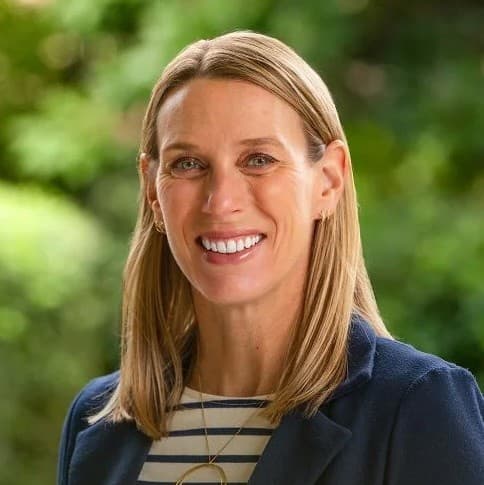
Ali Hartley
Chief Legal Officer, SimplePractice
Episode Overview
Ali Hartley chose healthcare law before she finished her first health law class at Boston University, and spent the next two decades proving the choice right: from a health-system legal team to legal leadership at fast-growing healthcare startups, through a pandemic that rewrote telehealth law in real time, and now the chief legal officer seat at SimplePractice.
Hartley scales legal in healthcare with three moves any in-house counsel can copy. She treats regulatory change as a source of opportunity, builds a team culture where lawyers can make mistakes and recover, and rolls out legal AI by shifting the team from fear to innovation.
In this conversation with GC AI co-founder and CEO Cecilia Ziniti, she shows the receipts. A cross-functional pandemic task force convened over a single weekend, a vendor review process cut from six hours to under 30 minutes, and a terms of service update her therapist customers could read in plain English.
About Ali Hartley
Ali Hartley is Chief Legal Officer at SimplePractice, the practice management platform therapists and other health and wellness providers use to run their businesses in all 50 states. She spent nearly a decade in-house at Sutter Health, then led legal at Favor, formerly The Pill Club, and at Carbon Health, where she also served as chief people officer.
She began her career at Reed Smith in a health-focused practice group doing litigation and regulatory counseling, with additional transactional experience outside that group, after completing the health law track at Boston University School of Law. At SimplePractice, she also oversees the cybersecurity function.
Key Takeaways
- Healthcare law runs on a dual framework. HIPAA and federal rules sit above 50 state licensing regimes, and the strategy call is when to apply the most restrictive state's standard everywhere.
- Risk splits into two categories. Provider licenses and patient health get near-zero tolerance, while revenue and business risk stay negotiable, and Hartley takes plenty of it.
- Regulatory chaos hides opportunity. When pandemic rules relaxed Medicare's in-person-visit requirement for telehealth billing, Hartley tracked the state-by-state changes as a dedicated effort, on top of the cross-functional task force she had already convened to move the company remote.
- Start an AI rollout with play. Her team designed fantasy cafe menus before touching a legal workflow, and her security team now runs vendor reviews in under 30 minutes, down from three to six hours.
- In healthcare, trust is the product. Every AI vendor decision and terms-of-service update runs through one filter: whether customers and their patients will still trust the company tomorrow.
What Makes Healthcare Law a Strong Career Path for In-House Counsel?
Healthcare law offers in-house counsel a rare combination. Constant regulatory change, high stakes tied to human outcomes, and a dual federal-state framework keep the strategy questions fresh. HIPAA and federal rules govern the delivery of care from above, while 50 state licensing regimes drive the details from below. SimplePractice operates in all 50, so Hartley works both layers every day.
Hartley explains the pull:
I took my first health law class and I loved every moment of it. I loved the humanity of it, where you can really feel like you're having a contribution towards making health better for people while still focusing on that interest in the law.
She followed the interest through Boston University's health law track, into Reed Smith's health practice, and in-house to Sutter Health. She was always fascinated by medicine, though she knew the science itself was not her path. The law gave her a way into healthcare.
How Do You Set Risk Tolerance Across 50 States?
Hartley's framework separates risk into two categories with different rules. Provider licenses and patient health sit in the first category, where getting people on board with a conservative call is easy, because the downside is a clinician losing a livelihood or a patient being harmed. Business and revenue risk sit in the second, where legal can and should let the company take real swings.
When you're needing to go a more restrictive route, which isn't always the case, I don't want to imply that we don't take risk and we're not open to risk. But when you're thinking about those two areas, it's easy to influence leaders to understand ... an outcome may impact someone's life in a really negative way, versus a business decision that might have a revenue impact, where you can take a lot more risk.
The practical move that follows is to sometimes take the most restrictive state's standard and apply it across the board, even when no law requires it. The judgment call is knowing which category the decision lives in.
How Did the Pandemic Change Telehealth Law, and How Did Legal Teams Respond?
Two regulatory shifts opened the door for telehealth in 2020. Emergency interstate licensing agreements let providers get licensed across state lines quickly, and Medicare relaxed its rule that a provider needed an in-person visit before billing for telehealth. Providers could suddenly see new patients for the first time over video and get paid for it. Because private insurers follow Medicare's billing guidance, the change moved the whole market.
Hartley remembers the Friday in March 2020 when everyone went home expecting to return in two weeks. By that weekend she had convened a task force across finance, legal, HR, and tech, moving the workforce remote, securing laptops, and working through lease and vaccine policy questions. Then she put on a different hat.
Don't look at this as just a messy time, which it is, and we need to react to all the things that are happening. But look at it as, where are opportunities also?
Monitoring the emergency regulations became a project of its own, because each state moved differently, and every change was a new answer to what providers could do and where. The lesson she draws from that year is the one she repeats to younger lawyers:
Don't wait for permission to do something that you see as an opportunity that can be an unlock or a value add, or a big risk that you need the company to understand. Don't wait for someone to tell you to do it. Do it.
Nobody told Hartley she was in charge of the pandemic response. She looked around, said “I got this,” and started. The best legal leaders, in her view, are the ones who take opportunities and run.
How Do You Build a Legal Team the Business Wants to Work With?
Drill one message into the culture until the team can recite it. Legal exists to open opportunities, and the business should come to legal because it wants to, because legal is a problem-solving partner that anticipates issues before anyone else sees them. Hartley has been the first legal hire at more than one company, and she sets that culture before anyone else can set a different one.
We are not a policing function. We are a business enabler. We open opportunities. We find opportunities. We build relationships across the organization. We are true business partners.
The hard part is unwinding the perfectionism lawyers train into themselves. Hartley names the pattern. Type A perfectionists want to give the perfect answer, tie it up with a beautiful bow, and send it out. That instinct, she argues, holds in-house teams back.
The best lawyers are not the ones who don't make mistakes. They're the ones who make mistakes, recover from them quickly, and learn from them.
The leader's half of the bargain is psychological safety. Her team knows that if they push the envelope and something goes sideways, she has their back, and they recover together. Mistakes made while pushing the envelope are evidence of innovation, provided the team admits them, fixes them, and shares the learnings.
How Do Legal Leaders Handle Work-Life Balance?
It looks better from the outside than the inside, and Hartley wants people to say so. She pushes back on the polished image with a story: she brought her son to school without shoes the other day. She rejects the 50-50 idea of work-life balance in favor of mode-switching, leaning into work when it demands it, and taking the afternoon for a kid's game when work eases up.
How Do You Roll Out AI to a Legal Team Without the Fear?
Start with play, before workflows and before demos. Hartley's first AI assignment to her legal team was a creative task on general-purpose AI tools. She had them design a menu for a cafe that blends two worlds, human and underwater, human and steampunk, whatever they wanted. Thirty minutes, no judgment. The outputs ranged from simple menus to a fully coded website, and the team compared results together.
I was trying to shift from fear to innovation. That's how we think about AI, not as something scary, but as something that helps us innovate.
From there, adoption compounded. Every team meeting now includes a shared AI win, whether that is a manual task automated or an output someone verified and tweaked into their own voice. Her power users teach the rest, including a live demonstration that a chat does not remember your favorite color once you open a new one, which defused the team's data anxiety better than any policy memo. Teams that formalize that education step move faster, which is why GC AI free legal AI courses for legal professionals taught by former general counsels. Full disclosure from the episode: Hartley and her team are GC AI customers, though the cafe exercise ran elsewhere.
The compounding win she cites first is vendor review. Her security team built a prompt that runs the first pass, checking a vendor's history and security posture before a human touches the file, the same first-pass structure in GC AI's guide to vendor agreement review.
My security team has now built this really awesome prompt for vendor reviews. They're using AI as that first step in a vendor review, to go out and check has that vendor had any cybersecurity events, all these things that previously, I think they told me, used to take between three to six hours per vendor review. And now it's down to less than 30 minutes.
What Should a Legal Team Use AI for First?
Administrative work, deliberately. Hartley's rule is that AI takes the tasks that feel burdensome, and the reclaimed hours go to deep thinking, strategy, problem solving, and relationship building. The human stays in the loop. That means reviewing outputs, confirming sources, and checking the result against a lawyer's judgment.
I'm really encouraging my team to be human, and let the AI do stuff that feels more administrative and burdensome to you.
How Should Legal Teams Vet AI Vendors When the Data Is Sensitive?
Start from trust and work backward. SimplePractice's customers are therapists whose patients share some of the most sensitive information there is, so Hartley's company-wide AI guidelines sort every use case by task and data type. Public research on non-confidential questions can run on ChatGPT. Anything touching PHI triggers what she calls a laundry list of additional requirements the vendor has to meet, on data use, trust, and even environmental impact.
Our company needs to be trusted by our customers and by their patients, first and foremost. If we don't have that trust, we don't have a company.
The same filter shaped how SimplePractice launched its first AI product. Her team drafted the terms of service addendum, then put a plain-English summary at the top explaining what the company was committing to, because their customers are therapists, and a reader who cannot parse legalese will fill the gap with worst-case assumptions.
Regulators are moving on the same trust question. Hartley points to the first wave of state law on AI in therapy: Illinois enacted the Wellness and Oversight for Psychological Resources Act in August 2025, Nevada's AB 406 barred AI systems from practicing mental or behavioral healthcare as of July 2025, and New York codified its own AI companion safeguards (General Business Law Article 47, §1700), effective November 2025.
Her position for SimplePractice is clear. Therapy is human-centric, and AI's job is taking the administrative burden off therapists so they can do what they do best.
Recommended Reading
- AI for General Counsel: One Operating Layer for Solo GCs to Full Departments: how in-house teams run intake, contract review, and vendor spend on one legal AI layer, the operational backbone behind the rollout Hartley describes.
- Legal AI Readiness Assessment: a free five-minute quiz that scores where a legal team sits on the AI adoption curve, making the fear-to-innovation shift Hartley talks through measurable.
Transcript
Ali Hartley0:00
We are not a policing function. We are a business enabler. We open opportunities. We find opportunities. We make build relationships across the organization. We are true business partners, right? And we're not that sort of like bump along the way or check checkbox along the way, like, okay, gotta take this to legal now. No, like we want people to see to come to us, not because we're legal, but because we are a good business partner and we're great problem solvers.
Cecilia Ziniti0:31
Welcome back to CZ and Friends, where we talk with legal leaders, technologists, and operators shaping the future of business and law. I'm your host, Cecilia Ziniti. My guest today is Allie Hartley, the chief legal officer at Simple Practice. Allie's career is the story of choosing healthcare law and building within it. She started in-house at Sutter Health, where she spent almost 10 years, then went on to lead legal at a company called Favor and Carbon Health. Today she's helping scale simple practice. Along the way, Allie has tackled some of the toughest regulatory challenges in healthcare, hello pandemic, while also showing how legal can unlock growth, not just control risk. Most recently, she's made AI real for her team, saving them lots and lots of hours. So she and I got in touch about that. And she's super candid about leadership the curveballs, the failures, the balances and perfection. And I remember when I met Allie at a tech GC or now L Suite event and thought this woman really has her stuff together. So I'm not surprised to see how much she's needed. So in this episode, we'll talk about why Allie chose healthcare, what it takes to scale legal and fast growing companies, and what she's learned about leading with humanity. Let's dive in. Allie, welcome to Hey.
Ali Hartley1:39
Thanks so much for having me. I'm super honored to be here and really excited to chat today. All right, let's go.
Cecilia Ziniti1:44
You've spent most of your career in healthcare law. So it's Sutter Health, Favor, formerly Pill Club, Carbon Health, and now Simple Practice. What drew you to healthcare? I mean, did you know, like even before law school?
Ali Hartley1:54
You know, it's thanks the interesting question. So actually, when I was in law school, I went to a law school, Boston University, that had a specialty or you could sort of do this track in healthcare law. And um I took my first health law class when I was there and it just like I loved it. I loved every moment of it. I loved the humanity of it, where like you can really feel like you're having a contribution towards making health better for people while still sort of that focusing on that interest in the law. Um, so after that first health law class, I just continued to take more and more classes in it and sort of did that track, that health law track at BU. Um, and then, you know, sort of followed the same, same sort of passion when I started a law firm as most most people do, a big law firm, and did a like the way that that I was at Reed Smith and the way that they had set up their life care and health sciences group was that it did both sort of litigation and regulatory work and regulatory counseling. So I got exposure and transactional work, I'll say too. And so I got exposure to a lot of different things that really solidified for me that I, you know, wanted to be on sort of that transactional regulatory side. And that's sort of what led to my my role at Sutter Health. But I'll say I was always just fascinated by medicine and and healthcare in general. You know, it's it's such a huge part of everyone's lives, whether you're healthy or not. And really being able to be a part of that was was fascinating to me. Although I couldn't, I knew I didn't have the mind for medicine itself.
Cecilia Ziniti3:16
Wow, interesting. So did you were you pre-med or anything before before law school?
Ali Hartley3:21
No, no, I didn't think like I well, I guess there was a moment in time where I thought I could maybe uh go into nursing, but uh because I just like the I, you know, I'm very much a people person, and so I like those relationships that you see develop in healthcare. But it yeah, the the the science part of it wasn't for me.
Cecilia Ziniti3:38
Okay. Well, I mean, it's not like you're shying from complexity though. So would you say, I mean, when you think about areas of law? Funny story, I think I actually uh one of the investors in Ali's first company, she was a GC at as a friend and invests in healthcare companies and had told me, oh hey, you should interview with this company. And I said, you know what, I do not know healthcare at all. Like it is literally one of the things on this show. I like to have GCs of areas that I don't know. So what's unique about healthcare as a as a field? I mean, I think the complexity is so crazy high. But what you know, is it you made a career out of it, but say more about the field itself.
Ali Hartley4:16
Yeah, so I think I think it's uh one, I I always feel like I have job security because it's just a constantly changing field and a really complex field. You're absolutely right. So what what I think is so interesting about it is you have both a federal framework, you know, when you think about HIPAA and some other sort of federal laws that oversee um, you know, the delivery of healthcare, but at the same time, so much of it is driven at the state level. And so the complexity of trying to figure out, you know, how many, you know, depending on how many states your company might be operating in, um, spoil alert, simple practices in 50. And so, you know, really trying to make sure that you are um understanding sort of how the laws play out across all the states, but then also incorporating that federal framework too. So for me, that sort of balancing that and trying to figure out what is the right approach, you know, take maybe the most um, you know, complex and you know restrictive state and apply that across the board, even when maybe you don't have to. Um, so really that strategy around balancing the federal and the state frameworks is is is a really interesting thing to me for sure.
Cecilia Ziniti5:20
Do you do you do that? Do you take the the highest common denominator in that scenario? So oftentimes California, recording this from California and I always ask me about employment law questions. It's always like, well, it kind of tracks blue state, red state, you know, but you get some weird exceptions, Texas and whatever. But how do you think about state law then? And and how do you get the the buy-in to get the company to to follow that if that's your philosophy?
Ali Hartley5:44
Yeah. So when it comes to um when it comes to licenses or when you're thinking about the delivery of healthcare to actual patients, right? And then also the licenses of people who are practicing healthcare. So that is their livelihood. Those are those are two areas that I feel like it's pretty easy to get people on board with not taking a ton of risk, right? Like we don't want to risk someone's license, right? Because if we do that, then they can't do their job anymore. And we certainly don't want to risk patients' health, right? So I think framing it in sort of that sense when you're needing to go a more restrictive route, which isn't always the case, right? Like, so don't want to imply that I'm not that we don't take risk and we're not open to risk. But when you when you're thinking about those two areas, I think it that's very it's easy to sort of influence leaders to understand, like, oh yeah, I get why, I get why we would need to do that over here, because like an outcome may actually impact someone's life in a really negative way, versus just sort of a business decision that might have a revenue impact or might have a, you know, southern other sort of downstream impact where those things are you can take a lot more risk on, right? And I think sort of navigating those two different areas when you're within the complex framework of healthcare, just being able to figure out, like, okay, what is the impact of this law? What is the impact of that law? How does it impact how we think about how risky we're gonna be or not? And I think that's that's always been a really fun part for me because it's just a million moving parts, right?
Cecilia Ziniti7:06
Yeah. So speaking of moving parts, so healthcare, you know, obviously I think the uh the Affordable Care Act obviously came out in your in your tenure as a lawyer. The pandemic happened in your tenure as a lawyer, telehealth happened, like what I mean, I mean, pick one and walk us through kind of like like, I mean, obviously the the job security point is well taken, but any any one project stand out as like, okay, this is the big C change, or does it just kind of always feel that way?
Ali Hartley7:34
Yeah, I mean, I think uh specific to healthcare, and I'm happy to talk about AI too, because I think that is the biggest change we're all seeing in the world right now, in our lifetimes probably. But uh specific to healthcare, um, I really think the pandemic was like such an interesting time for lawyers because you had an opportunity to take what was take an unknown of what was happening. Like, what is this gonna mean for the world? How do we navigate these things? Regs were coming out really fast and furious, and take all that like messy noise and distill it into a very proactive approach for your company. And I think, you know, my my approach as a legal leader has always been like we are a business enabler, we are a partner that can sort of unlock opportunities for a business. And the pandemic really proved that for lawyers, right? Because we could understand, okay, do we want to go after a PPP loan? Do we how do we navigate vaccines, right, within our employment base? How do we go from all in person to you know all remote? And what are the risks associated with that, particularly when you're thinking about data security and privacy and things like that? How do we navigate we're not in an office anymore and we don't want to pay the lease anymore? How do we navigate that? So, like lots of different legal opportunities for legal leaders to proactively think about ways that are gonna help your business manage this really uncertain time. And I think it really, like for me, it was an opportunity to shine, honestly. I felt like it really was. Yeah.
Cecilia Ziniti9:03
Wow. So walk us there. So I remember like, what is it, like the New Yorker cartoons or the cartoons of like, you know, it's pandemic and the ARHR person is like beaten up effectively from like dealing with all this. But it sounds like that wasn't your experience. So you did you did have the opportunity to shine. So paint us a picture. So it is, let's say, March of 20 or June of 20. And you, you know, where were you? What were you doing? And um, you know, a lot of our listeners are folks that you know aspire to be great legal leaders. Like, what did you like physically do um at that time and just give us a picture?
Ali Hartley9:34
Yeah, it's so funny. I remember it so well. I'm sure you do too. But like I remember sitting in the office on the Friday, it was it was uh March something, 17th, or something like that.
Cecilia Ziniti9:44
13th, I think 15th, yeah. I remember when I was.
Ali Hartley9:46
Yeah, I remember being in the office and we all were like, okay, we're not gonna come in next week. And everyone was like, see you in a couple weeks. Little did we know. Like we were not gonna see each other for a long time. So like that sort of like highlights, like it was just so unknown. Like everyone thought, like, okay, we'll be back in a week or whatever. So we all went home that Friday. Um, I can't remember when all the PPP guidance came out. I think it was maybe a month or so, or the PPE loans came out a month or so later. But I do remember very quickly thinking, okay, we need to figure out how we move our workforce from in-person to remote very, very quickly, right? How do we get set up from a security standpoint? Make sure everyone's laptops are like, we know we can connect remotely and all this stuff. So really just like getting a task force together very quickly to create not only policies, right? Because like, you know, policies are policies, but making sure we can actually like implement them. Do that and yeah, do do them. So I do remember getting a task force together very quickly among like, you know, finance, legal, Jar, tech to be to like really put our minds together and think, okay, we got to move quickly on this. And I do remember that weekend being very busy. Like I remember working that whole weekend. And then I would say from there, really starting to think, like I kind of put a different hat on and said, okay, what are our opportunities here? Not just like how do we navigate this, but what are our opportunities? How is telehealth gonna change? Like, you know, we were in that world, uh, that healthcare world of telehealth. So, like, are there are some of the, and we saw this, like there were all these emergency stays and emergency regulations coming out that actually opened up opportunities for us as a business to go out and do more than we were previously doing, right? So I was really trying to encourage everyone to put on that hat of like, okay, don't look at this as just a messy time, right? Like, which it is, and we need to like react to all the things that are happening, but look at it as like, where are opportunities, also, right?
Cecilia Ziniti11:42
Wow. I I mean, I love that. Also, um, give us a little tutorial, right? So, okay, so like healthcare is licensed by state. You know, Dr. Joe is in Arizona, he's he's got a license in Arizona, Dr. Jane is in California's licensed in California. So pri pre-pandemic, could they kind of zoom doctor people in other states? Or what was the like like what what changed? You mentioned a stay of regulation. I I vaguely remember this. I had a fractional client in the healthcare space, and I I got a crash course in that. But from a kind of a like a legal team standpoint, what was what was happening and how did you turn that into an opportunity?
Ali Hartley12:16
Yeah, so there were some like sort of cross-state emergency licensing things happening. So pre-pandemic, you know, you can and and today, like you have to get licensed in the state where you're practicing, right? So where the doctor is or where the patient is or both. Where the patient is, right? So like where the patient is, you need to be licensed. Um and so there were some sort of this like um trying to think of the right word. It was like sort of like collaboration among states where you could like very quickly get licensed in another state if you were licensed, like your example of like someone's in Arizona and I'm in California. Like I could very quickly get licensed in Arizona if I'm licensed in California, if the states agree on that, right? Or if a new regulatory comes out. So monitoring those regulations was actually like a huge tax and task in itself because like it was happening differently across different states. And so making sure we're understanding clearly, like the state's doing this now, this state's doing this now. Like, what could how do we like how do we let our providers know that that's what they can do now? But I would say in addition to that, one of the biggest things is that um, you know, Medicare um and and sort of from a billing perspective, a lot of um private and you know, private insurance companies follow guidance from Medicare, right? So one of the big things that came out was previously that you were you were able to bill under telehealth. Like you could bill for a like telehealth session. However, the previous guidance was that you had to have had an in-person visit first. Like you have to have an in-person visit first, and then you can move to health, telehealth from there. So that was really relaxed during the during the pandemic. So it opened up opportunities for providers to see new patients for the very first time over telehealth and then be able to bill for that, right? Because like it's one thing to be able to do it, right? Like there was no loss thing, you can't do it, but like you got to get paid for what you're doing.
Cecilia Ziniti14:01
Yeah, it's not legal to eat it, but it's illegal to sell it. So it's kind of like, you know, it's kind of the same thing. So yeah. Interesting. Okay, all right. So okay, so you so you came out, so you you helped navigate, you, you're getting the licenses in different states, you're seizing opportunities. Was there a moment where kind of the executive leadership team or the board was kind of like, yeah, Ellie, you know, you got this? Or like you mentioned that it was an opportunity for you to step up, just kind of moment step out, you know, stand out for you, that it's like, okay, yeah, I we got this.
Ali Hartley14:29
Do I was there a moment? I don't know if there was a moment that someone told me that. Um, I I do remember just saying, I got this. Like I can do this. I love that. How did we ask you how to read? And and I and I actually think like that's that's it was actually a big lesson for me now that I'm like pausing and thinking about it, was that you know, you don't have to wait for someone to tell you that you can do something, or or like I want to put you in charge of this, or I want, you know, I want you to run this thing down. You know, I and I think actually the best leaders are the ones who just take opportunities and run with them. And and so yeah, I do remember it being like, all right, I just gotta like, I don't think I like practically thought like this is my moment to shine or this is my moment to go do this, but like I do like I just did it. Like it was something that needed to be done. And so we did it, right? And I think that's a really like I if I could tell sort of younger lawyers that like don't wait for permission to do something that you see as an opportunity that can be an unlock or a value add or you know, something that you think is gonna be is a is a big risk that you need the company to understand. Like, don't wait for someone to tell you to do it, like do it, right? Exactly.
Cecilia Ziniti15:39
No, that that gave me the chills. There's a there's a thing in startups too of like you can just do things. And I think I I think the law firms, I I love my time at the law firm. I was at Morrison Forrester for for six years, but they sort of teach you that you can't in some ways. It's like, you know, that there's this hierarchy and that it's like you gotta check on everything. And but that's good. And I think it teaches this sort of diligence and client service and other things. But I had that realization too. And I think it's it's it's just a leadership thing, even of transitioning of like you know, even it it's applicable in life too. And I think startups, you know, I get people asking me, well, how did you decide to to leave being a GC and become a found a company? And I said, I I just did.
Ali Hartley16:21
Like you know, I was gonna say, like, you're a perfect lesson in that. Like, you're just like, I saw an opportunity, I saw a need, and I just did it.
Cecilia Ziniti16:28
Like it, exactly. No, it's a it's like in in the whole world. I mean, even Twitter was all alight that like anything you see, any invention that you see, somebody just did it. They're not smarter than you. I also get back to the Michelle Obama advice, and she's like, she says something, she's like, I have been in every room, you know, and world leaders and you know, great scientists and whatever. And like she says something aspect of like they are not that smart, but like they are smart, but just as smart as you all. So, yeah, no, I I I love that lesson. Switching a little gears a little bit to leadership. How do you encourage that on your team? And how do you build a team? You've been the first legal hire at various of your companies and had the opportunity to set the culture. So what do you what do you do?
Ali Hartley17:09
Yeah, I think I um, you know, one of the things that I do a lot, and my team is probably really sick of hearing me say these things, but I really do try to drill in the culture of like, we are not a policing function. We are a business enabler, we open opportunities, we find opportunities, we make build relationships across the organization. We are true business partners, right? And we're not that sort of like bump along the way or check checkbox along the way, like, okay, gotta take this to legal now. No, like we want people to see to come to us, not because we're legal, but because we are a good business partner and we're great problem solvers and we think about things from a different perspective and we look around the corner and anticipate things and then solve for those before you even know they're there, right? So, you know, I think one of the things that I really do is just drill that philosophy into my team over and over and over and over. And because of that, like I think they feel empowered to go out and build those relationships and make suggestions and, you know, problem solve and do all that. I think, you know, if there's if there's one thing that I like learned along the way or would give advice on, it was just like, don't be afraid to make mistakes. Because like that's I think one of the things that holds lawyers back a lot is like we want to be perfect. We want to give the perfect answer. Um, we're all perfectionists, I get it. Type A perfectionist. Like, we want to give the perfect answer, we want to give the perfect advice, we want to solve for everything, like beautiful bow, tie it up, send it out, right? And I think that really holds in-house legal teams back a lot. So I'm really trying to push my team to be like, it's okay to make a mistake because the best lawyers are not the ones who don't make mistakes. They're the ones who make mistakes, re-overcome them very quickly, and then learn from that mistake, right? Like I think, I think people, like my view of like executive leadership is people actually really value and appreciate when mistakes happen because it means you're pushing the envelope, it means you're trying new things, it means you're being innovative. And the key there is then like admitting you made a mistake. Like, don't try to hide it, don't try to like bury it. Like admit there was a mistake, recover from it and learn from it and share those learnings, right? And I think like that's one thing I'm real I really try to push my team to do a lot as well.
Cecilia Ziniti19:27
I mean, the the tying things up with a bow, it's like that satisfaction of doing that. I I mean I'm the same way even now with marketing.
Ali Hartley19:34
Yeah, it's hard. I I have to tell myself that all the time, right? All the time. Like we can't be perfect, can't be perfect, can't be perfect. And it's a really hard thing for like all the training we've all been through, right? Like it teaches us that to like be perfect, have the great answer. And I think like it's really hard to to move away from that. And so yeah, that's that's it's it's tough. And and one of the things that I make sure my team knows is like, I've got your back if there's a mistake, right? Because I think one of the hardest things is like if I don't have the perfect answer, it's not tied up in a bow, I'm gonna get in trouble or I'm gonna be like something bad is gonna happen, right? And I think really the important thing as a leader of that team is to like make sure people understand, I got your back. Like, don't worry about that. Like, go be innovative, go push the boundaries. Like, I have your back on this, right? And we'll we'll recover together, right?
Cecilia Ziniti20:21
Any um, you mentioned relationships, any particular story to tell on that, either about yourself or a team member, any, you know, in the executive seat, commonly it's the CFO, but any any partnership that's particularly strong for you, either at your current company or in the past?
Ali Hartley20:37
Oh yeah. I mean, I was seeing that in the past, um I can do both. In the past, um, at Carbon, I had a really, really great relationship with my CEO. And I think one of the reasons it was such a great relationship was um he he trusted me, right? Like he trusted that I was going to do the job well and do the job that needed to be done and not over-rotate one way or another. And it takes a while to build that trust. Like that wasn't there immediately, right? Like we, we, it took some time. But I think that was a really great lesson for me. And and now I look for that at new places is like, is that trust gonna be there? Am I like how how is the legal function viewed by the CEO or by the company? Like, are we viewed as that value add or are we viewed as something different? And so being able to know that that trust is there really empowered me to build the organization and build the legal team. And at Carbon, I also was the chief people officer. So, like, you know, build the HR team there as well in a way that like felt right for me, but I didn't feel like I had this sort of like person looking over my shoulder being like, Oh, I don't think you're doing it right. Yeah. So that that trust was really important. Um, and then a simple practice, I would say, you know, one of the great things is that like at this company that's been interesting to me is that um, other than our CEO, the executive team is all fairly new because we went through a transaction. And and so it's been really fun to all be sort of in the same boat of like learning the company together. It feels like like a founding team 2.0. I would say is like, you know, we're all building the relationships together at the same time. And that's one of the hard things of like coming into a company, right? That's maybe been a more established company is like, well, everyone has the relationships already, and now I'm trying to get get in. So that's been a really fun, fun thing to do and be a part of and a little bit unique, I think, um, different than a lot of going to new companies. So really building that trust, I would say, is is been key to me.
Cecilia Ziniti22:33
What's the um uh if you can say more about simple practice? Was it was it private equity bought or was it did it have IPO? You mentioned transaction. Yeah. It was what what what drew you to there and how's it been?
Ali Hartley22:44
Yeah. So um simple practice was part of a holding company that was a public company, which was then bought by a private equity firm and taken private. And then the subsidiaries of that holding company were all spun out as separate companies. So um Simple Practice, you know, got spun out into its own separate company. And so then had to build out the management team from there. The CEO was a part of the holding company. So we did get some sort of like, you know, transition of like, you know, historical knowledge and and you know, of true, like deep understanding of the company. So it wasn't like we were just like a whole executive came in and we had no idea what to do. So that's been really, really fun to sort of, I would say it's like it's uh like build like we're feel like we're in founding building mode, but at a really healthy company, which is which is really nice. Like really nice. Like you have the it like kind of has a startup y feel to it, but it's not a startup, like it's it's a very healthy company. So um that's been been a really fun, unique thing.
Cecilia Ziniti23:42
Interesting. Yeah. Other other interesting and fun, or depending on your point of view. So you mentioned that you oversaw people. Um you people officer at your last company. A lot of CLOs and GCs do that for various reasons. What's your biggest advice on that? And do you want to do it again? Yeah, you're apparently not doing it now. So what what was any lessons learned or wisdom to impart from that?
Ali Hartley24:04
Oh my gosh. My biggest, my biggest piece of advice is hire really amazing leaders on the HR side. Like I had two incredible leaders, like people I would work with in a heartbeat again. So if I I would say like if I did it again, I would make sure I had those two people with me. Um, because you know, like, like sure I can lead a function, um, but like I had not had any experience in HR. Obviously, there's a lot of overlap between legal and HR in terms of like employment laws and compliance and stuff like that. But like the actual sort of like leading the people function, like leading the actual people of the company, I had no experience in that. And so I very heavily relied on my experts. And I think that's one of the things that is really important for leaders to do is like, no, you're not an expert, and you're not meant to be, right? Like I knew my, like when I was asked to take over that role, I knew my CEO knew I wasn't an expert in HR leading an HR function. He knew that. But he trusted me as a leader and a person to actually like drive results and drive change or whatever it was he needed me to do. And so for me, that was like, okay, I can I can lead the function, but like I really need, I viewed myself as more of like an executive sponsor of that function, right? And I needed the really strong leadership to actually run the function itself. And so for me, it was like, I need people way smarter than me in this roles to do the work and to tell me how I should be thinking about this, right? And I could then sort of like help make sure strategy was appropriately communicated to them, help sort of drive like our roadmap or what we needed to do, unblock things for them, escalate things for them. And so that was how I saw my role, not being like the expert in HR. Of course, I learned a ton, which was really great and fun too. But yeah, for sure, people smarter than me. I needed. Good. No, I love that.
Cecilia Ziniti25:57
It's I remember so clearly that moment when I first had a report that you know, that I hadn't done the job that they were doing. And uh it was, you know, exhilarating, but also I had to be very deliberate of like your job is not to learn that thing, your job is to help them be good at that thing. And yeah, it didn't at the same time. Yeah.
Ali Hartley26:19
Yeah. I'm doing it now too. I'm I'm overseeing the cybersecurity function here at Simple Practice, and I've never done that. And like, yeah, it's I always love and welcome these opportunities because I do think it's a really great way to continue to always be learning. And that's something that I I can talk about was like a big, big moment for me in my career when I got to a point where I wasn't learning anymore and I realized for myself I needed to always be learning. So I I did I I always welcome these opportunities. But now that I've done that over to HR, I did sort of sort of learn that same lesson of like, I don't need to know how to do cybersecurity, but I need to know how to help them do their job better and make sure that it's like getting done in the way it needs to be getting done in the company. Yeah.
Cecilia Ziniti27:00
Anything on cyber specifically that's um that you would advise GCs or CLOs taking it on today? Get a great CISO. Yeah, of course. Yeah, I mean, insurance has always been, I guess, you know, you're in healthcare, so that's a big one. The risk management around that is always a kind of a perennial topic for GCs. Have you ever had a a cyber incident in your career or something or something like that that sticks out?
Ali Hartley27:22
Man, you're gonna make me like jinx myself. Right. Yeah, no, no.
Cecilia Ziniti27:25
All right. Okay, okay. Question with Duran, right?
Ali Hartley27:28
Yeah, no, no major cyber ins incident. However, like we act as if there is always one around the corner, right? Like and you have like a tabletop and all those kind of things. Okay, cool. Yeah, it's good.
Cecilia Ziniti27:39
Awesome. Good. Well, uh, okay, so let's talk about AI. So you are uh so Allie is uh and her team, uh full disclosure, are customers of GCAI, but and have had a great experience, um, which is exciting, but more just generally. So tell us about kind of how you're using AI, how you rolled it out. And then, you know, you mentioned some of that, you know, either either personality of lawyers of perfection and this sort of like diligence to a fault, which is great. But I think AI is in some ways you could be seen contrary to that. So, how did you roll out AI? How are people experiencing it? And then these sort of, I guess, personality change management tips that you have.
Ali Hartley28:17
Love this question. And I please stop me if I'm talking too much because I can talk about it all day. So, how I rolled it out, you know, I I think like I approached it with like, there's a lot of unknown and fear around AI, right? Like people are worried it's gonna take their jobs, people are worried it's gonna get be done completely wrong. They're gonna worry, like, what does this mean? What does this mean? So I kind of wanted to like, as I rolled it out to my team, I wanted to take a step back a little bit and be like, let's just like play with it. Like, I'm not asking you to do anything different. I'm not asking you to do this or do that. Like, just play with it. So the first thing we did as a team was I actually, and sorry, we didn't use GC AI for this, but we various AI tools is is is we, I gave them a prompt and I not a prompt, but I gave them a task, and it was come up with a menu for a cafe that is a mix of two worlds. So it can be like the human world and an underwater world, or the human world and a steampunk world, or whatever it is, like come up with a cafe. It should have like really fun, unique items that span both worlds, get some pictures on that menu. You know, I really to encourage them. And then we got together as a team and we shared. And it was like a huge variety of like, you know, some people like had just like menu items and no pictures, and someone built a website for the for that cafe. Like it was this huge variety of stuff. And and it was really fun because we all got to sort of like, and I said, don't spend more than 30 minutes on it, you know, and like really just try to have fun. Like, don't worry. This is not like no one's getting like judged by this, right? So it I really tried to start it as like, this is a fun thing. Like, this is a fun thing that you can do something. That you didn't know how to do otherwise and use AI to do it. Right. I've never like been a graphic designer, but I had a lot of fun like trying to design pictures and like tweaking them. I spent more time just because I like, I got into it and I had fun. But like, you know, it was it was really fun to do that. And it sort of took that fear away from people of like, you know, this, like I was trying to shift from fear to innovation. Um how do, how do we like then that's how we think about AI, not as something scary, but as something that helps us innovate. And so from there, then we've been um at every team meeting, we're sharing out, you know, someone, something someone discovered how to do differently through AI, or something that they did that took some like manual work off of their plate and now AI is doing it, or something that they're having AI do that they're checking, right? So great example might be like my security team has now built this really awesome prompt for vendor reviews. And so they're using AI as sort of that first step in a vendor review to go out and check like, has that vendor had any, you know, cybersecurity events has the vendor, you know, they do all these things that previously, I think they told me used to take over like between three to six hours per vendor review, and now it's down to less than 30 minutes. And it's been so fun to see. Like the team is like just like running with it. And so that's been really fun to see. And I think like for me, I've been really very, very deliberate about you should be thinking about AI as taking administrative tasks that free up your human mind, right? And that human mind may actually be taking a look at what an AI output is saying and tweaking it to like your voice or the way you want to think about things or the way you want to communicate things, or taking that AI output and just confirming, you know, checking to make sure like the links are like the sources are correct. And that's generally like matches your judgment as a human, and then freeing up that time to do more deep thinking and more strategy work and more, you know, problem solving and building relationships and all that stuff. So that's so I'm really encouraging my team to like be human and let the AI do stuff that you know feels more administrative and burdensome to you.
Cecilia Ziniti32:12
I mean, so many good threads to pull there. I think the fun thing, there, you know, there's this thing in tech that it's like going from toy to tool and all these technologies, you know, the internet and everything like started off basically as toys or they didn't quite work or whatever, and like being very deliberate. But I love the I mean, you mentioned like the care about people, that it's like, okay, this menu idea is so much fun. I can't like I have literally not heard it. I I I do advise people try it on something personal first. And we definitely see at GCAI people who were very facile with ChatGPT for their own stuff, you know, recipes. Uh, you know, we had uh one of our big users does all his kids', you know, t-ball rotation and everything in Chat GPT. Um, but then when they get to the legal work, okay, they need more. And then then that's when they come to us and they do great. But it is this this concept that you've landed on that's like a like a mindset and this um sharing wins. Give us like what just one more window. So fly on the wall at your team meeting, what what's happening? And and how do you run your team meetings in general? I mean, that's a good question too.
Ali Hartley33:12
Yeah, I think um what's been fun to see is we have some people in our team who are much more advanced than AI. So I told you, like someone built a website. Like I was not like they vibe coded it, they're like, whatever. And so, like, so what I what I've been really what's been really fun for me to see is those people who are a little bit more advanced, like actually educating the rest of the team on it. You know, like this is what an LLM does. This is what it means, like this is what it's doing with data. This is what you don't need to worry about, right? Like, I think one of the biggest concerns about AI is like just a lack of education around what's happening with data and what does this mean and what is it remembering about me? And like, you know, just that creates fear. And so what we've really been trying to do is like I'm using sort of my power users and the folks who know a lot about AI to help educate the team on what is actually happening in AI. A great example would be like we were going through, and my teammate was trying to say, like, doesn't remember things, like outside of a chat, right? And so we went through this thing where like he wrote in the chat, he said, like, my favorite color is blue. What do you think about that? Right. And then like later in the chat, he's like, What's my favorite color again? And it said blue. And then he opened up a brand new chat and he said, What's my favorite color? And it said, I don't know enough to know that what your favorite color is. And like that was eye-opening to people because they're like, it doesn't remember me. Like it's not learning about me. And it's not like taking my personal information and like remembering it forever and spinning it back out later. So like helping address some of those and educate around some of those fears has been really like unlocking opportunities and it's making people more open to trying new things and using it.
Cecilia Ziniti34:49
Yeah, it's fun. I mean, uh on the GCI side, when we develop, we do get questions about memory. And I know ChatGPT, you know, has rolled it out. But for me, I think as a lawyer, that's something that I that I that did make me skittish. Where I uh my example, and this was like extreme, was you know, I have kids and I sometimes I use ChatGPT for personal things as opposed to GCI as well as for math, right? So GCI doesn't have some of the tooling around the math card because it's not as relevant. And so I had been asking questions about essentially we were preparing for a funding round at the time, and I'd be asking questions about our growth rate and things, all very good. But uh, but at one point it came back and said something like, you know, as the mom of a five-year-old, you should do whatever with your revenue. And I was like, oh my God, like that is not relevant. Get the heck out of here. Like, not cool. I don't know where you wrote that down, but like my five-year-old, like nothing to do with this. Like that day, I literally I came back to the engineering team and I was like, all right, when we implement memory, which we're working on in a roadmap, like, don't ever say that somebody's having children or not is relevant to the revenue. Like, we can't. That is creepy AF.
Ali Hartley35:55
Yeah, it is. And that's what people worry about for sure. And so, like, making sure, you know, one of the biggest things that we've done as a company at simple practice is really making sure we're choosing the right tools, not only from a sort of trust perspective, a data use perspective, but also frankly, an environmental perspective, right? Like we, you know, we're like there's a lot of concern out there, rightfully so, around sort of the impact on the environment of these AI tools and models and all the you know energy it takes to build them. Yeah, from a data perspective, from a trust perspective, and you know, from an environmental perspective, and I think. And and so we built, you know, we when we first started launching AI company-wide, you know, we put together a lot of guidelines around like, okay, third-party tool use based on sort of this matrix of a sort of like based on what kind of what are your tasks, what data are you inputting, what are you, what are you doing with it? Here's the type of tool that you can, and here are the features of that tool that need to be there or don't need to be there, right? So, like, you know, everything from like, oh, I'm just like researching very like non-confidential public information, sure, go use chat GPT for that, right? Like I'm asking about like help me like come up with a fun team building activity for my team. That's fine. Use chat GPT. But if you're like using, you know, and we handle PHI. And so that's like like we need to be extra, extra, extra triple, quadruple careful, right? And so, like, you know, if we are using PHI in an AI tool, all these like a whole laundry list of additional things need to be true with that AI vendor for us to use that.
Cecilia Ziniti37:25
Well, and I think that gets back to the kind of caring point around, you know, so the users of simple practice are me and you and everybody, right? So, you know, you literally have a consumer, right, where there's an interface to actual patients. And so thinking about it that way, that like, you know, I always was really big on like, you know, when the FTC had the privacy rules to kind of you know, pre-GDPR around like reasonable expectations and what do people believe. And I thought that was one of the most fun things to do as product counsel was to like to to do that. Now, I think since then, and obviously HIPAA, I think healthcare is is more technical, but that's like this kind of like building your judgment around that has been a big thing in my career. How do how do you so how do you build judgment?
Ali Hartley38:08
Well, I think we start with trust. Like we we need to have like our company is to be trusted by our customers and by their patients, right? Like first and foremost. And so if we don't have that trust, we don't have a company. And so when you start there and then you are building features and building protections and building whatever that you need to build within the the product to actually like to you know deliver the services we're delivering as a company, it's a if you start from that place of trust, it's a lot easier to build that over time because everyone's on the same page about like we don't want to do something that's going to break that trust, right? Like we don't want to do something that's gonna ultimately result in someone feeling like, wow, you you really like screwed up there with my data or you did the wrong thing or you said you were gonna do this and then did something totally different. Yeah, but like do what you say, say what you do. It's always taken. Yeah, totally. And and so much of that is like helping translate um you know complex like legalese into very normal standard language, right? So when we launched our first AI product at Simple Practice, we did an addendum to our terms of service, as most people do. And, you know, not only did we did I like draft up or my team and I draft up this like, you know, legal document, but we put a summary at the very top of it that was like, what does this mean in plain English? You know, what is and that was really important because people can interpret when you have a customer base that is, you know, not legal. Most people have customers that are not legal, or unless it's like a big enterprise B2B business where the legal teams are talking to each other. Like for us, like our customers are therapists and they're not trained lawyers, they're not trained business people. And so we wanted to make sure that they understood what we were committing to in very plain English, right? Because if we didn't, they might may start making some assumptions as like, oh, this provision says this, and so that means you're trying to be sneaky here or whatever.
Cecilia Ziniti40:02
Well, I mean, therapy is literally the most like the highest risk use case around AI, right? I mean, whole news articles and things, and it's like, you know, the sort of some of the personality aspects, obviously one of the highest opportunity areas too, obviously. Um, you know, in terms of like, you know, the loneliness epidemic. Um, I talked with uh an AI leader and he said that in terms of therapist intake, so I don't know if simple practice does this, but he said that the amount that people will bear their souls to an AI is actually even higher than to a therapist. What do you what do you think about that?
Ali Hartley40:38
So we don't we don't have any our our a we don't have so we our platform is built for therapists, and so we don't directly interact with the the patients or the the clients themselves. But like what our goal is as a company is to take administrative burden off of therapists so that they can do what they do best, which is deliver care to their patients, right? So we are, you know, providing administrative support, I would say, in the back end for them and sort of their partner and their business partner along the way so that like we we do believe actually that therapy is human-centric, but that AI can be a very powerful tool to help drive that therapy and help drive that human-centric interaction between patients and their therapists. But like we we do believe that therapy is is human-centric. But certainly, yeah, we've seen out there, like I think, I think therapy is the highest use case of Chat GPT. Yeah. People are going to that. And it's it's a little bit scary, right? And and probably a little bit dangerous. But I think I think we are seeing some regulations coming out around this. So um, you know, Nevada and Illinois just both came out with laws sort of regulating um the use of AI in therapy. I think New York has has a law on AI companions. And so I think we're starting to see some some movement um on this. So it'll be interesting.
Cecilia Ziniti42:00
I I think it's like, you know, I I think obviously I think a lot about this in the context of lawyers and like what happens, and then like, okay, so for therapy, it's like you increase the I guess the amount of people that can have access to at least some form of therapy. There's also really interesting opportunities around like, you know, I I know there's some companies succeeding with like diabetes management where it's basically like you need to be reminded and you should be able to ask um things and have kind of expert at your fingertips and then kind of escalating that with a with a with a practitioner kind of above it. So lots of interesting opportunities. I'll be curious. I I think I'm gonna I'm gonna set a reminder to to to do this podcast again in three years. So Mark, you're gonna be you're gonna be the the first repeat guest in three years, and we're gonna talk about like therapy and AI. So that'll be super fun. Awesome. So let's go to um basically the some closing wisdoms. Allie, your perspectives on AI, healthcare, leadership. I mean, super inspiring. I'm literally like, like, can I be Allie when I grow up? Um but if you could, uh I'm serious, I mean it.
Ali Hartley42:58
Well, can I say something actually to that, which is something that that you said in the beginning that made me laugh, which was like, oh man, she has her shit together. Like, this is something that I actually had a had a like skip level with one of my teammates the other day. And she was she was sort of saying the same. She's like, how do you do it? Like, what are you what is like and I my reaction was like, on the outside, yeah, it may look like all the and it's not just me, all these leaders, you to Chilea. Like, it may look like how on earth does she, is she a mom? Does she f like as a founder of a like tech company? Like, what is happening? And I just said I looked at her and I was like, it it may look that way, but like literally, I brought my son to school without shoes the other day. Like been there, been there, done it, done it, or or miss my shoes, done that one too. It is not like like truly, like I think that we all and I think we need to share those stories, honestly, because I think it's so hard, particularly for women, to like, you know, I'm gonna back up a little bit and say, like, one of the reasons that I'm in the armor, like the chink in the armor, you know, you don't want to admit it no, I'm just saying, and I remember not have it together. I do not have it together. And I am not like like I'm like, I love that you said you want to be me when you grow up, but like, like why? Like I was like, you know, and I think this is this is one of those things where it's like I I always like oscillate between like what I'll say is like owning my power and being like really proud of like everything I've done in my career and like all like the work that it's taken to get here. And and yeah, I am really proud of that. And I and I think it's awesome. But I also like want people to know like it it is far from perfect and I mess up all the time and I do things wrong all the time. And I like like am I an awesome mom? I I would like to think so, but I don't do it right all the time. And I and I don't believe that there ever is this like idea of work-life balance, you know. I don't believe that like it's always this perfect 50-50 scenario. What I do believe is like you find a way to navigate when you need to be more work mode and less mom mode, and more mom mode and less work mode. And taking advantage of those opportunities when like maybe things are a little bit quieter at work and knowing like, okay, this is my opportunity to like be more into like family and like take an afternoon off and go to my kids' sports games or whatever it is. Um, and I think it's really important that that people understand and not try to put this like undue pressure on themselves to be perfect. Absolutely.
Cecilia Ziniti45:23
Yeah. I mean, it it's also like, I mean, I I think what you said to that, like to take that moment to reflect in your pride too, though. It's okay to be, it's okay. Like I had funny enough, you know, since you work for a company that's sells a therapist, I uh with one of my kids, I had through the law firm, they had basically that you could um see a therapist like six sessions and it was like included as part of like your your benefits. I think it was just works or something, I forget what it was. Anyway, I I did it even having never gone to a therapist, I went to one. It was a Palo Alto, it was pre-pandemic. And I remember I walked into her office and you know, we were introducing each other, and she said something like, you know, you have your you clearly have your stuff together. Like I like something to that effect, or like you're so put together. Because I was like, you know, I had like whatever, my law firm, you know, kind of navy slacks, whatever. And I literally still remember it. It was 13 years ago, actually, probably, you know, maybe 12 years ago, because it was post-part of my 13-year-old is 13 today. Anyways, and and it left an impact in me of like, yeah, give yourself some credit, man. Like, I mean, that's the other thing, too. So like, love everything you said. This has been so much fun. Um, and yeah, so in terms of anything else, any book, podcast, or resource that's meaningful to you that people should have a listen to.
Ali Hartley46:27
So I would say, like, I really love Mel Robbins. I don't know if people listen to her a lot, but I really love her, her, like a few things that she does. And one is really this ideal of like, let them let me. And and what that really means is like, let them believe this or like have their opinion about this or think this about that. Let me like control the things that I can control. And and this is like a concept that I, you know, I'm not able to like say it and let them let me. But like I've really lived a lot of my life trying to master, and I will say I've far from mastered it because it is really hard. Like it's hard to not care about what other people think about you or whatever. But what I what I've really tried to master it in the sense of is like control the things that you can control and let the other things go that you can't control. And I actually um I coach my kids' water polo team, and I've been coaching for the last like four years. It's a local club program, it goes year-round. And so one of the things that I really try to do with these kids is not just teach them like water polo skills, but really teach them like life skills. And so they hear me talk about this concept a lot of like, what can we control? Okay, we can't control what a ref is gonna act, like what they're gonna call and not call. We can't control how like physical the other team is gonna be, but we can control how we play our game, how we react to what the ref does and what the other team does, and and really just like focus in on knowing what we can do and can't do. And I think that really just like that concept applies across life, professional work, like what can I control, what can I not control? Um, and like how do we really hone in on the things we can control? So I would say like it is Mel Robbins' name, this this um sort of concept is Let Them Let Me.
Cecilia Ziniti48:16
Let them let me.
Ali Hartley48:17
Done. I love that.
Cecilia Ziniti48:18
All right, this is amazing. Thank you so much, Allie. Problem. Thanks for the time. It was so great to do this. Thank you. Really fun, made my day. Awesome. So that was my conversation with Allie Hartley. She's a CLO who's redefined what it means to lead in healthcare and tech and dropped some incredible, you know, pearls of wisdom in our conversation. From choosing a mission-driven field to building compliance, enabling growth, showing how AI can transform leadership and making it fun. Her story has just been a masterclass in combining kind of strategy with human leadership. If you enjoyed this episode, follow CZ and Friends wherever you get your podcasts or at gc.ai slash podcasts and subscribe to our newsletter for more stories and insights from legal leaders. Thanks for listening, and we'll see you next time.